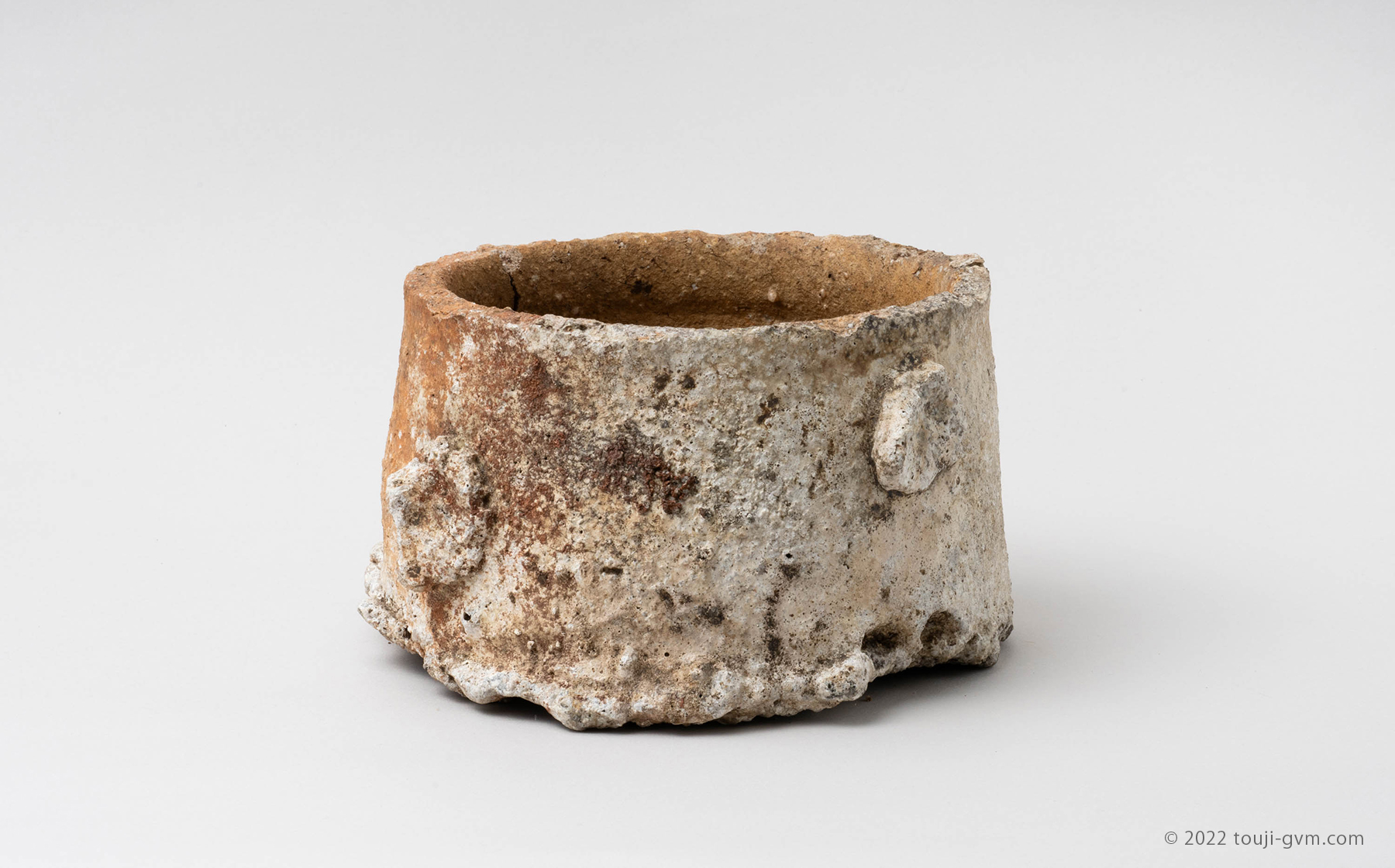
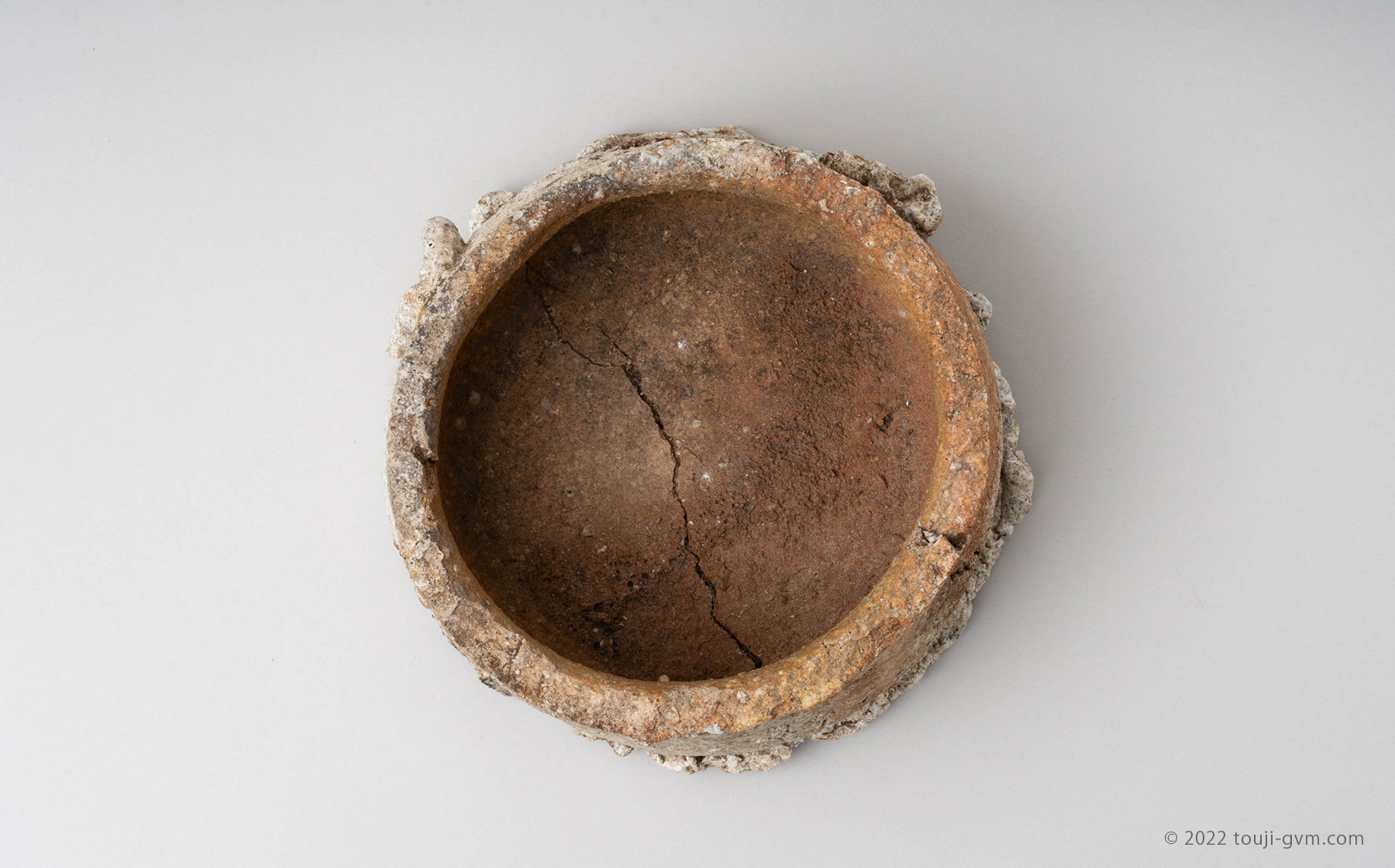
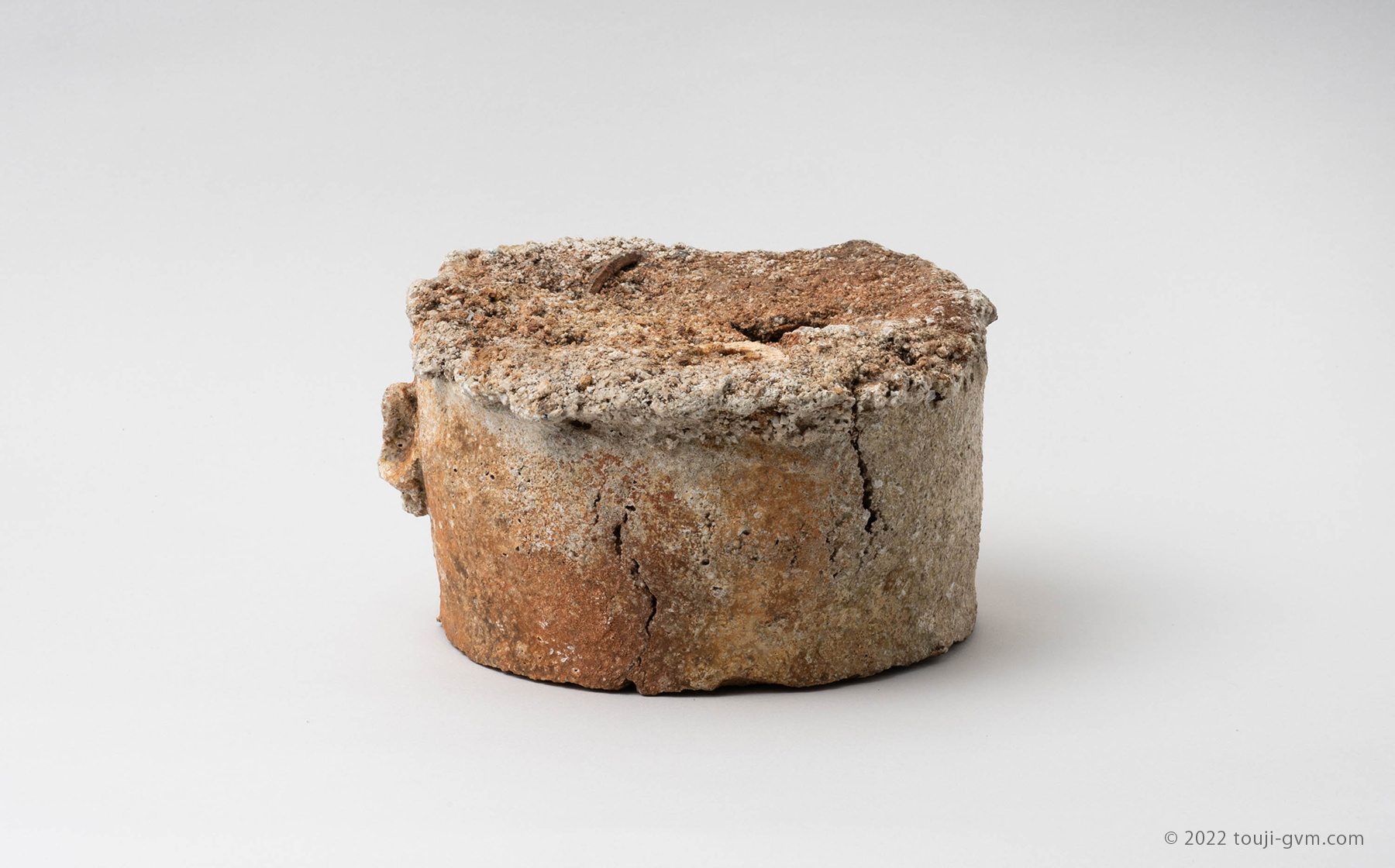
安土桃山時代の信楽焼にて使用されたえんごろ(匣鉢)。
えんごろ(匣鉢)とは陶磁器を焼く際に、素地に火や灰などが直接当たらないように保護ために用いられる耐火性の容器です。
信楽焼と同様の土を使い、厚さ1.5cm程度に厚く作られます。
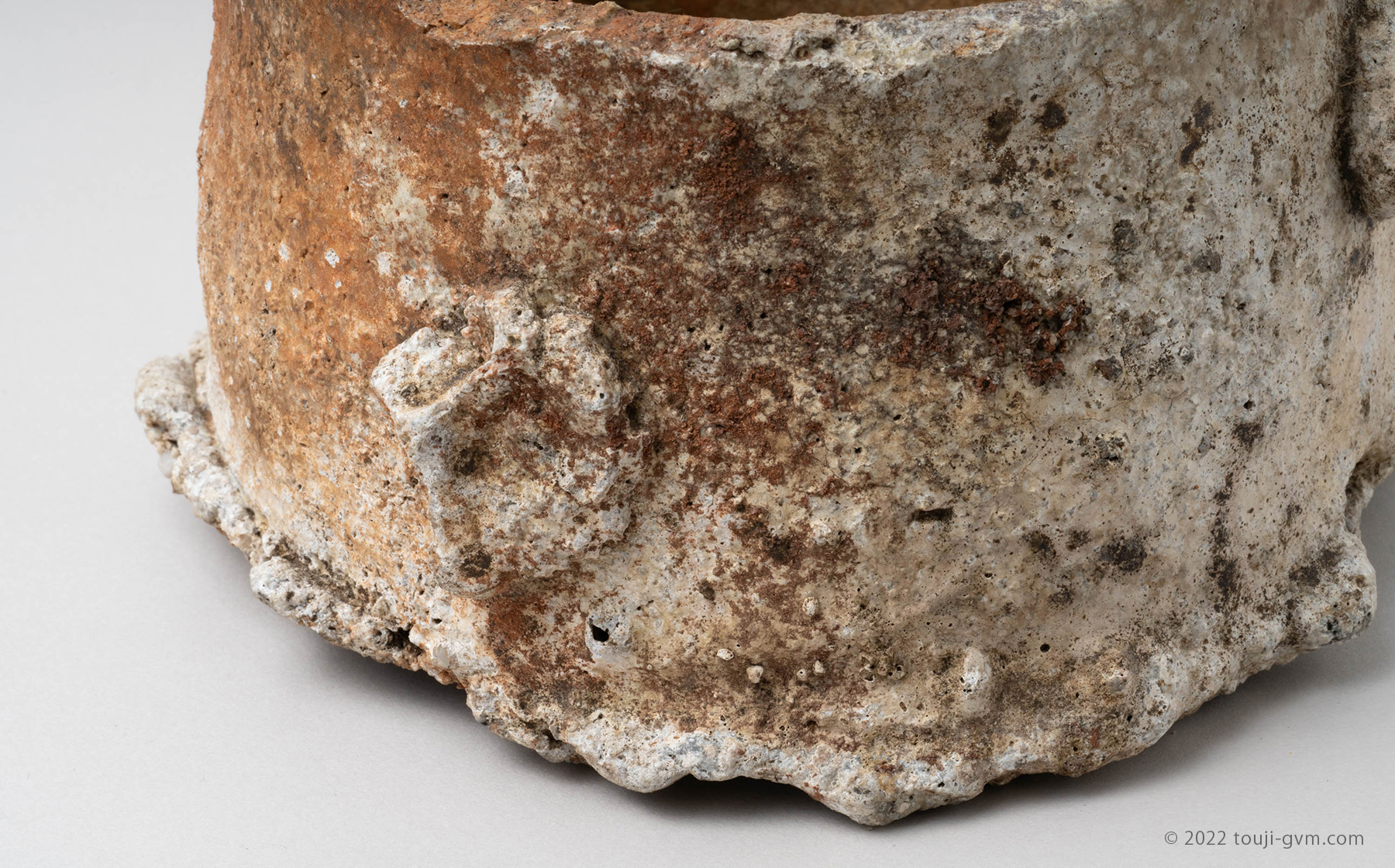
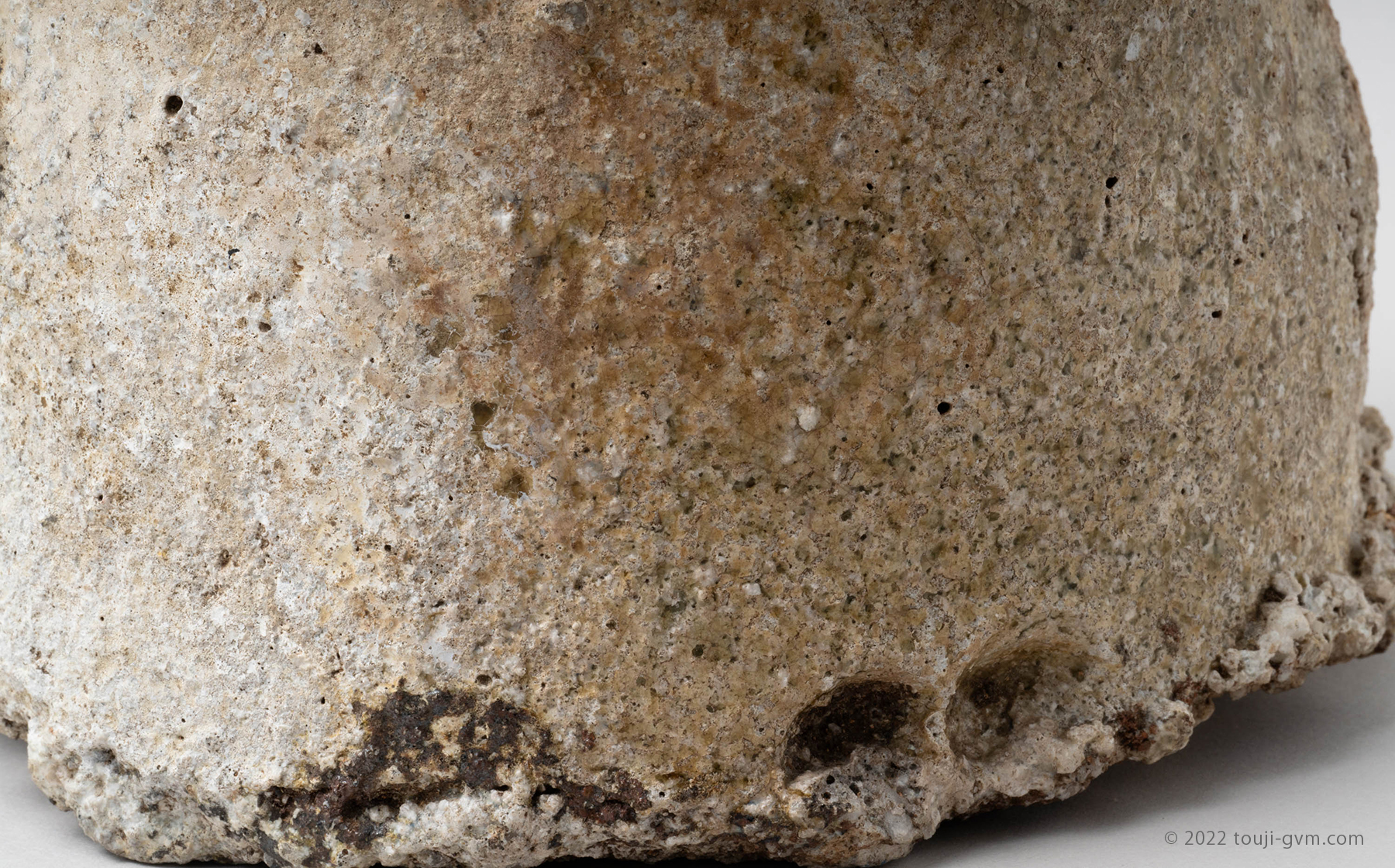
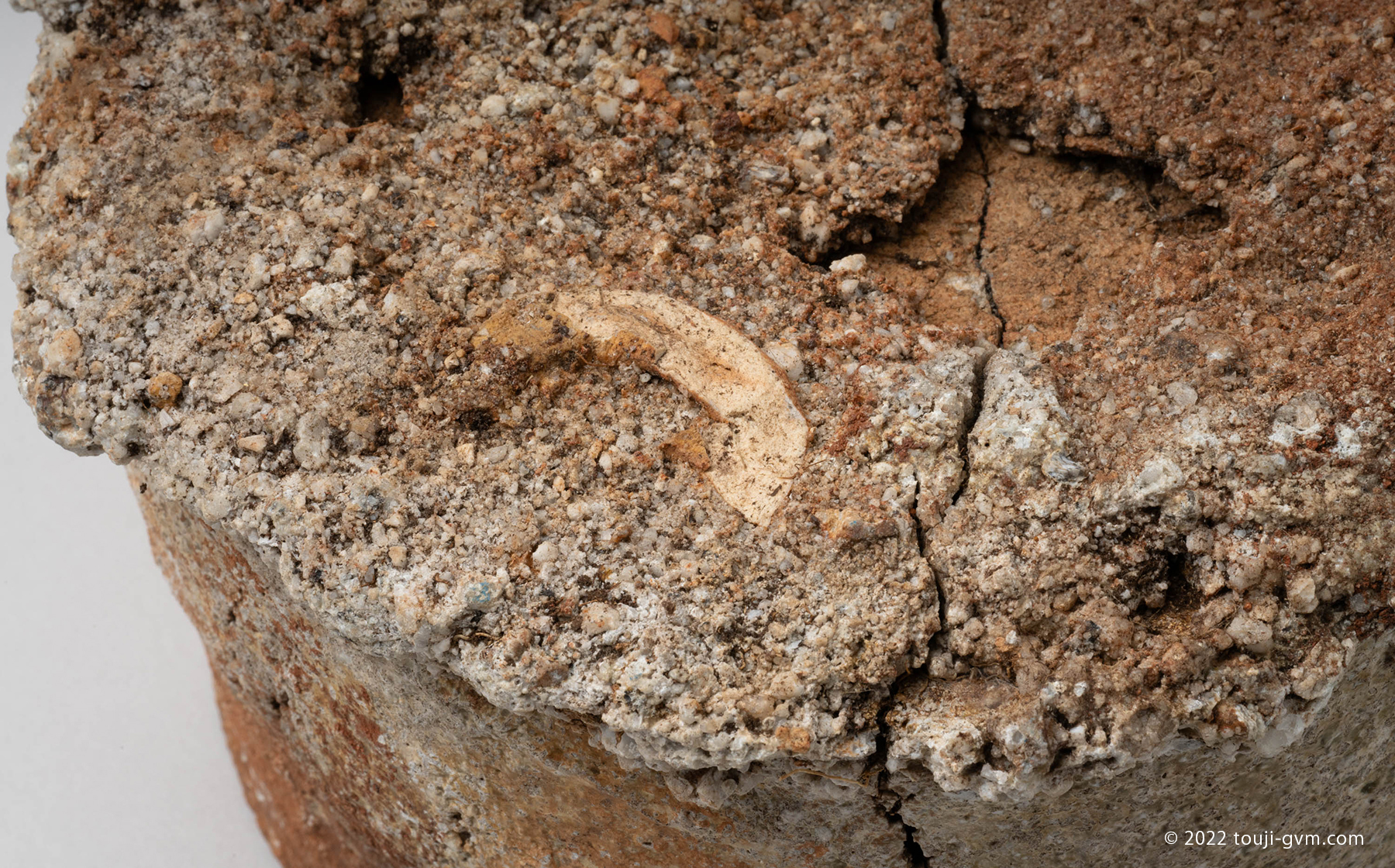
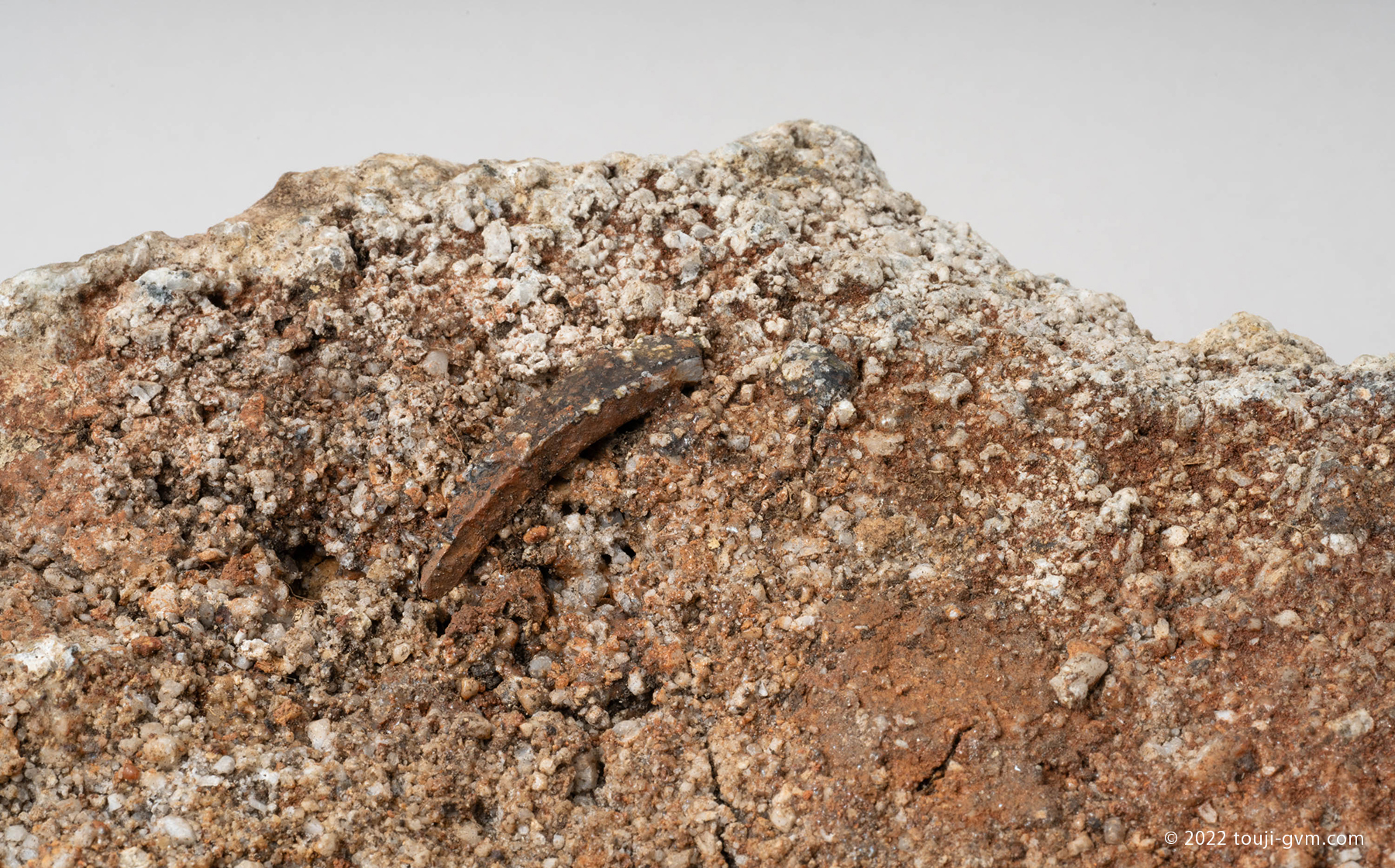
側面や底には他の匣鉢や陶磁器の破片がくっついた跡が残ります。
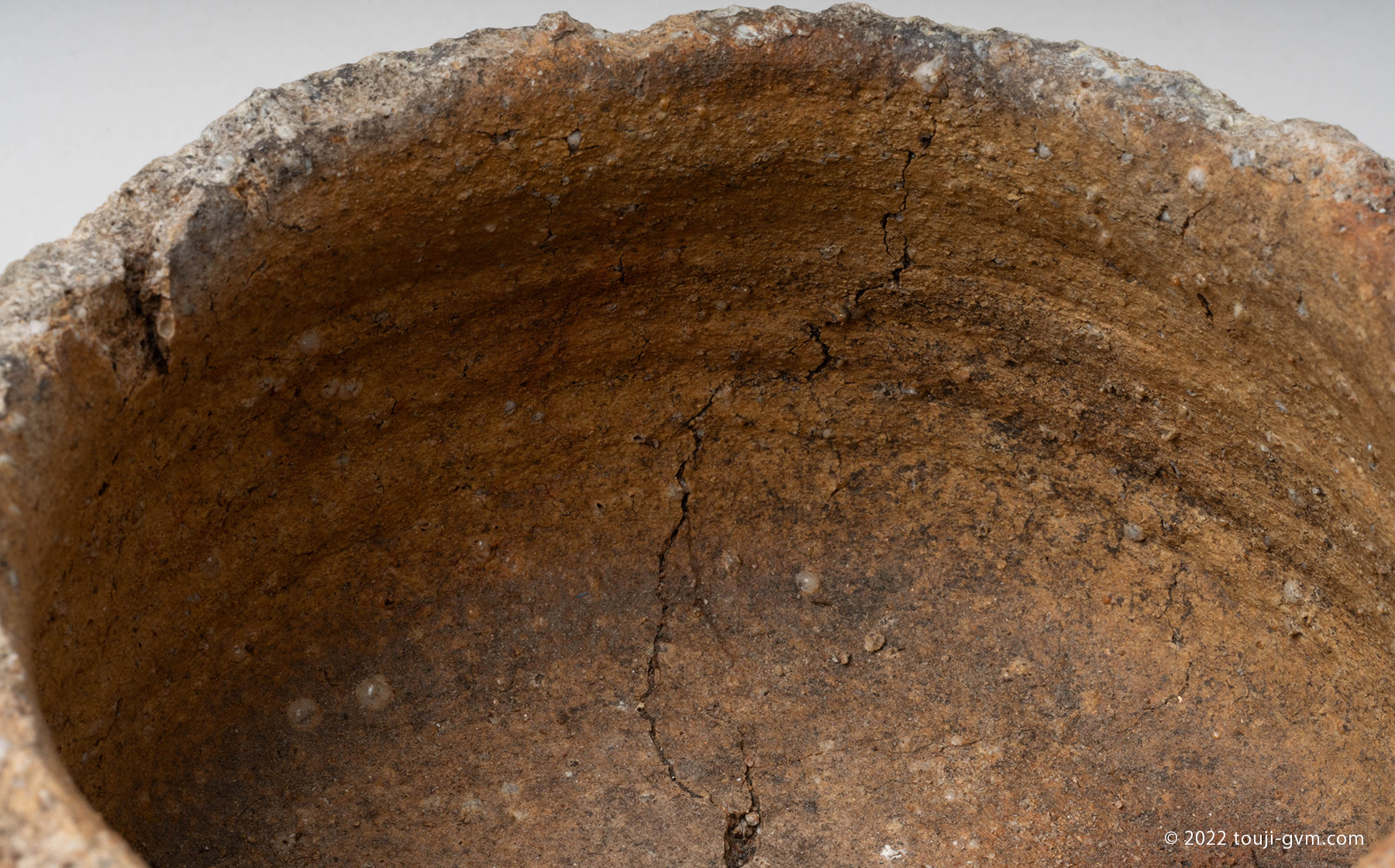
全体には藁灰などが溶けた自然釉が掛かり、緋色、透明釉、やや黄色がかった表情を楽しめ、これ自体が作品のようです。
まるで筒形の茶碗のようですが、信楽焼の沓茶碗はこのえんごろを基に作られたとも言われています。
—
Engoro (Saggar) was used in Shigaraki ware from Japan’s Azuchi-Momoyama period.
Saggar is a fireproof container used to protect the ceramic body from direct contact with fire and ash during firing.
It is made using the same clay as Shigaraki ware and is approximately 1.5cm thick.
Traces of other saggars and fragments of ceramics stuck to it remain on the sides and bottom.
The entire piece is covered in a natural glaze made from dissolved straw ash, and the color varies from scarlet to transparent and slightly yellowish, making it a work of art in itself.
It looks just like a cylindrical tea bowl, and it is said that Shigaraki ware cylindrical tea bowls were based on engoro (Saggar) .
| 名称 | 信楽えんごろ しがらきえんごろ |
|---|---|
| 時代 | 日本・桃山時代(1573年 – 1603年) |
| 国 | 日本 |
| 地域・窯 | 伊賀焼 |
| 寸法 | 高10.5cm、幅19.4cm |
| 分類 | 陶器 |
| 釉薬 | 焼締・自然釉 |
| 所有者 | WD Collection |
| 管理番号 | 000156 |
| Title | Shigaraki Saggar |
|---|---|
| Period | Momoyama Period(1573 – 1603) ,Japan |
| Culture | Japan |
| Area/Kiln | Iga ware |
| Dimensions | H. 4 1/8 in. ; Diam. 7 5/8 in. |
| Classification | Pottery |
| Glaze | Unglazed/Natural glaze |
| owner | WD Collection |
| Number | 000156 |